MNUE Students Win Second Place at the Grand Tour 2026 National Tourism Olympiad Research Conference
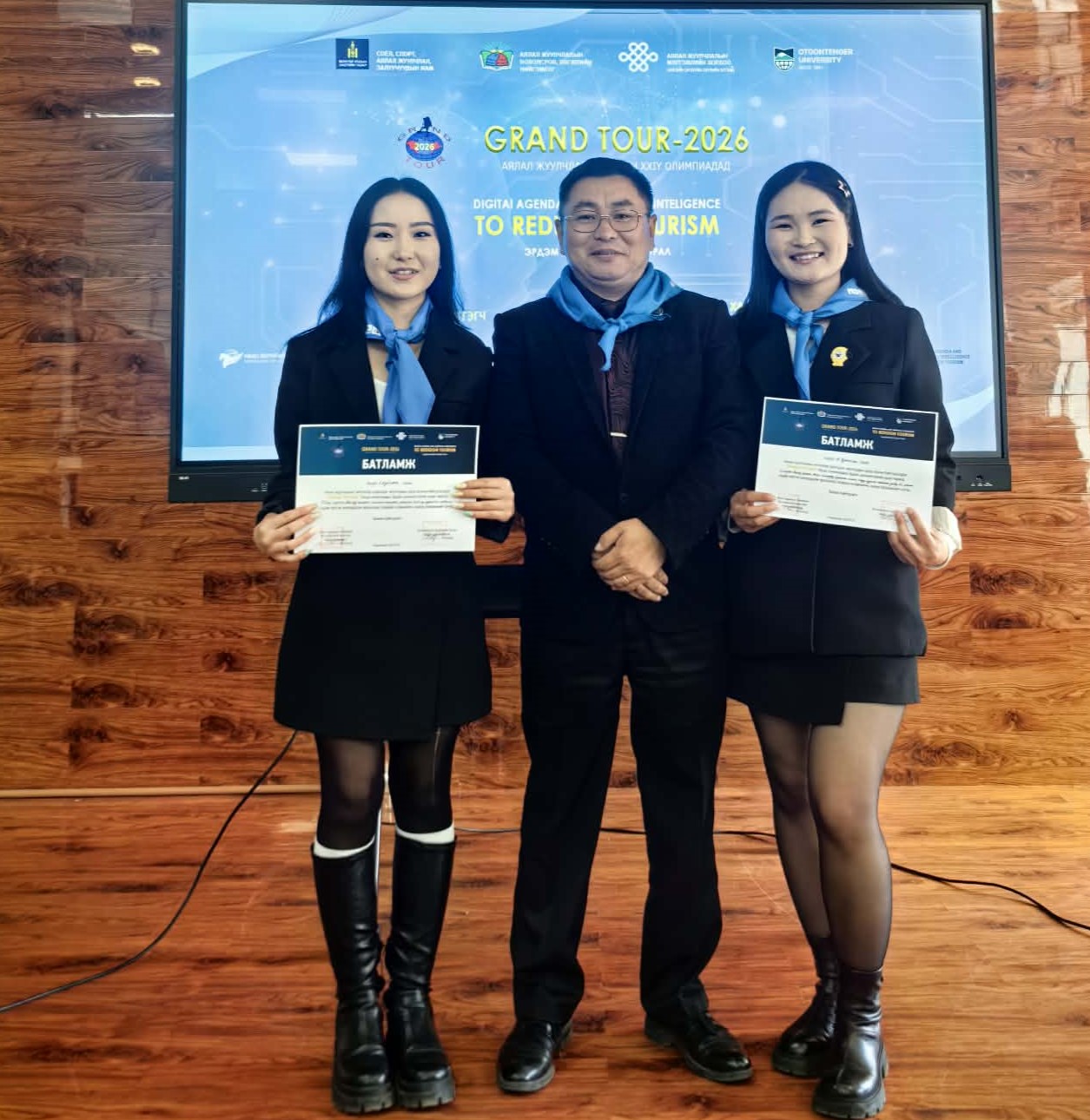
Students from the Sports and Tourism Program of the School of Physical Education at the Mongolian National University of Education (MNUE) successfully participated in the research conference held as part of the 24th Grand Tour 2026 National Tourism Olympiad, earning second place.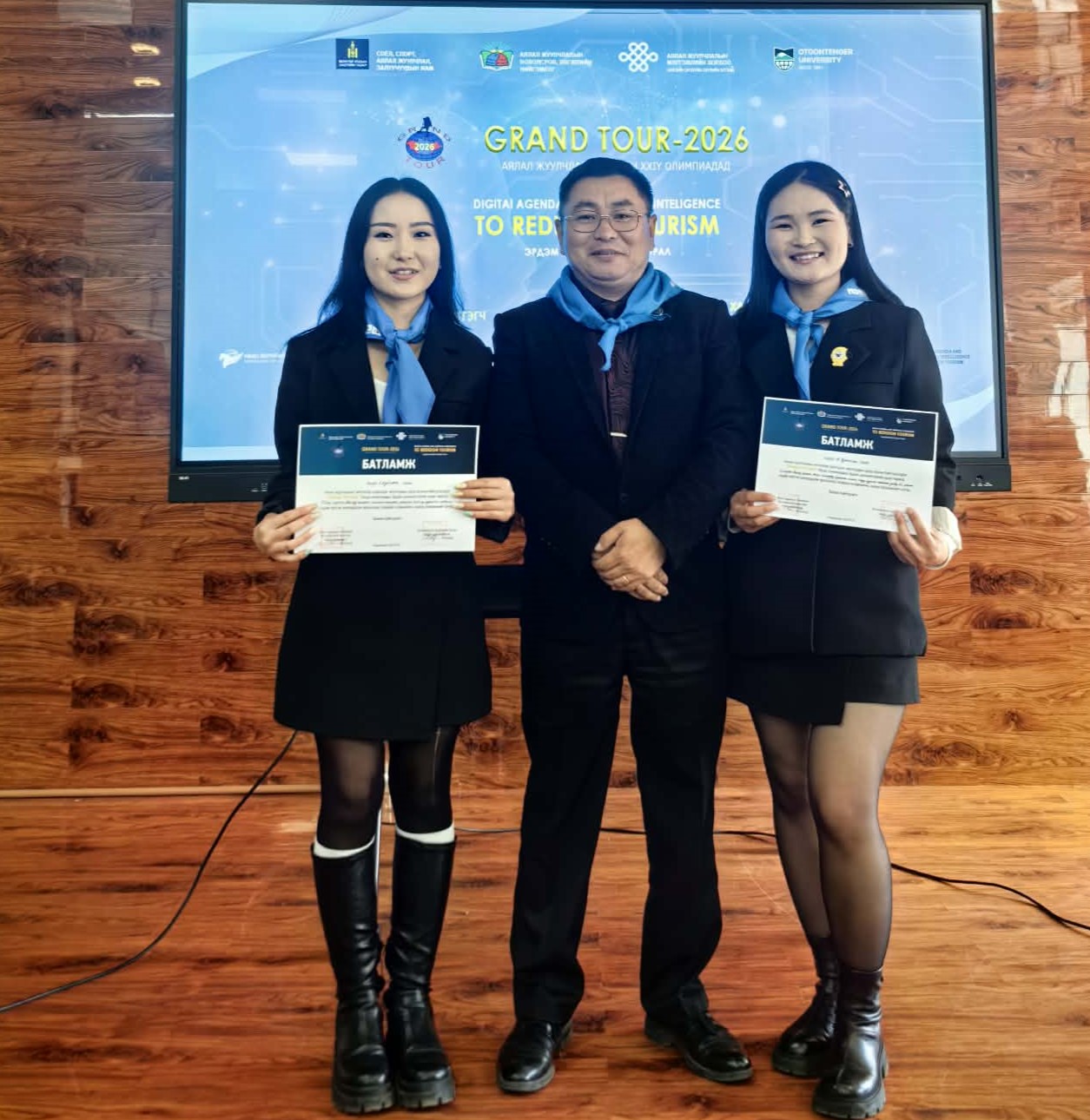
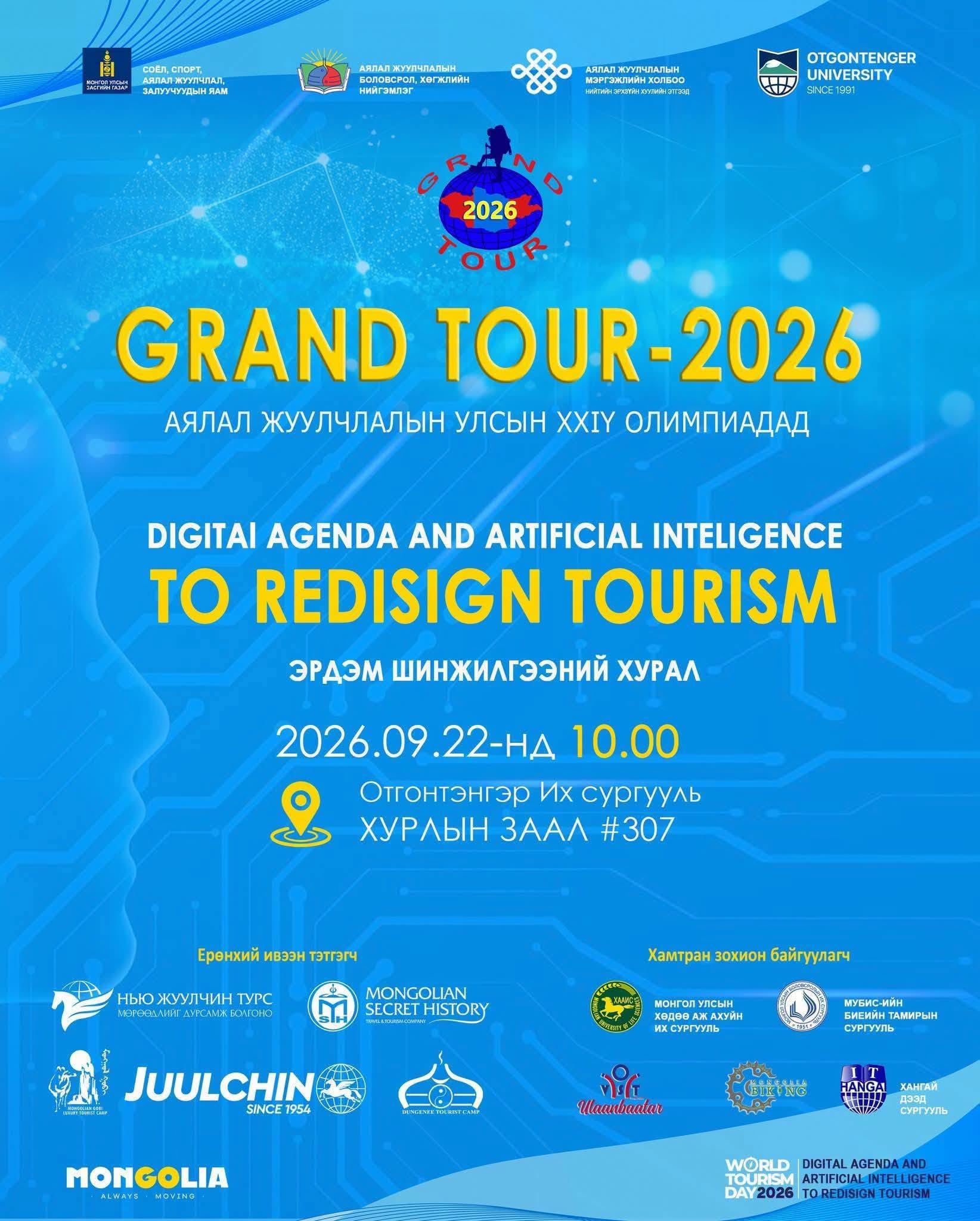
The Grand Tour National Tourism Olympiad provides a platform for future tourism professionals to demonstrate their professional knowledge, skills, research capabilities, and innovative thinking.
This year’s research conference was held under the theme “Digital Agenda and Artificial Intelligence to Redesign Tourism” and brought together 20 students from 11 universities and higher education institutions to present and discuss their research.
Representing the School of Physical Education at MNUE, M. Uugantsetseg, a fourth-year student, and P. Ulziimunkh, a second-year student in the Sports and Tourism Program, presented their research entitled “Design and User Evaluation of an AI-Based Information Chatbot for Mongolian Athletes Participating in International Sporting Events: A Case Study of the Aichi–Nagoya 2026 Asian Games.” Their research earned second place at the conference.
The study explored the potential of an AI-powered chatbot to provide Mongolian athletes participating in major international sporting events with timely and accessible information. It also assessed the usability and practical value of the proposed chatbot model based on user evaluations.
The Aichi–Nagoya 2026 Asian Games, selected as the case study, are the 20th Asian Games, being held in Aichi Prefecture and Nagoya, Japan, from September 19 to October 4, 2026. The Games bring together athletes from across Asia to compete in a wide range of sports. Major international sporting events require participants to access frequently updated information, including competition schedules, venues, transportation, entry procedures, safety guidelines, and other event-related services.
In this context, AI-powered assistance systems and chatbots can offer practical solutions by consolidating information from multiple sources and delivering it efficiently according to users’ needs. Such technologies are becoming increasingly relevant at the intersection of sports tourism, digital transformation, and artificial intelligence.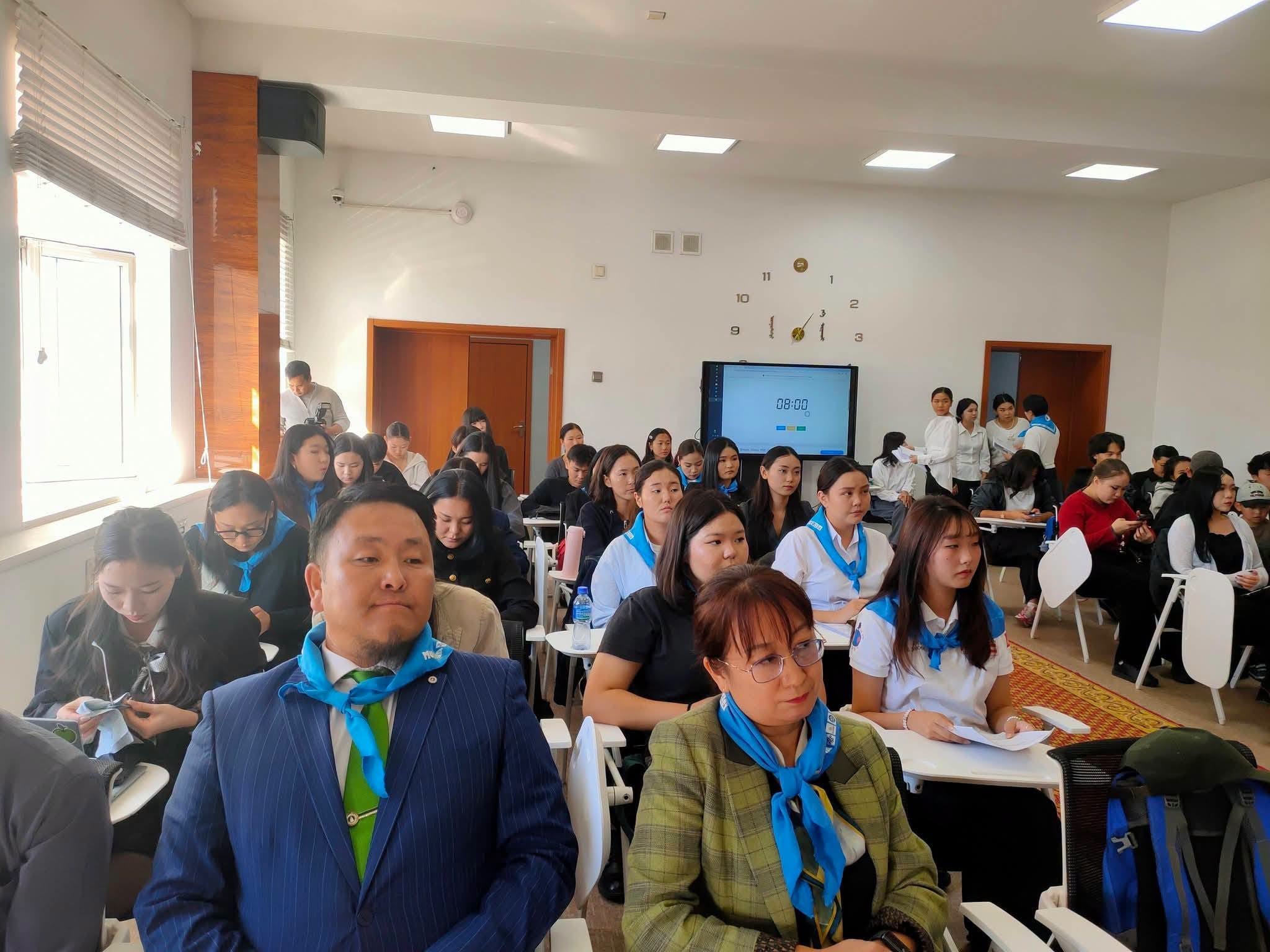
The use of artificial intelligence and digital technologies is also expanding rapidly across the global tourism sector. The theme “Digital Agenda and Artificial Intelligence to Redesign Tourism” highlights the growing role of AI in transforming travelers’ choices, tourism services, and visitor experiences, while emphasizing the importance of digital skills, technological accessibility, and human-centered innovation.
The Grand Tour National Tourism Olympiad continues to serve as an important platform for developing the professional knowledge, practical skills, and research capabilities of university students studying tourism.
The students’ research was supervised by S. Munkhnasan, lecturer at the School of Physical Education, MSUE.
Congratulations to M. Uugantsetseg, P. Ulziimunkh, and their research supervisor S. Munkhnasan on their outstanding achievement. We wish them continued success in their academic studies, research, and future professional endeavors.